
Oaxaca moves at a different pace. A slower one, a more human one.
Watching an artisan work is like watching time settle into something soft and intentional.
Hands carving, weaving, painting — each movement carrying tradition.
Talking about Oaxaca handcrafts isn’t talking about souvenirs.
It’s talking about identity.
And that’s exactly why this matters.
What makes Oaxaca’s crafts so unique
Few places in the world hold such diversity in a single region.
One day you’re seeing alebrijes being carved, the next you’re witnessing textiles dyed with cochineal, and later you’re touching black clay that shines without a drop of paint.
These aren’t just techniques; they’re inheritances.
Grandparents taught parents, parents taught children.
Every family adds its own character — almost like each workshop has a soul.
Craftsmanship here is more than work.
It’s a cultural language.
Key experiences you shouldn’t miss
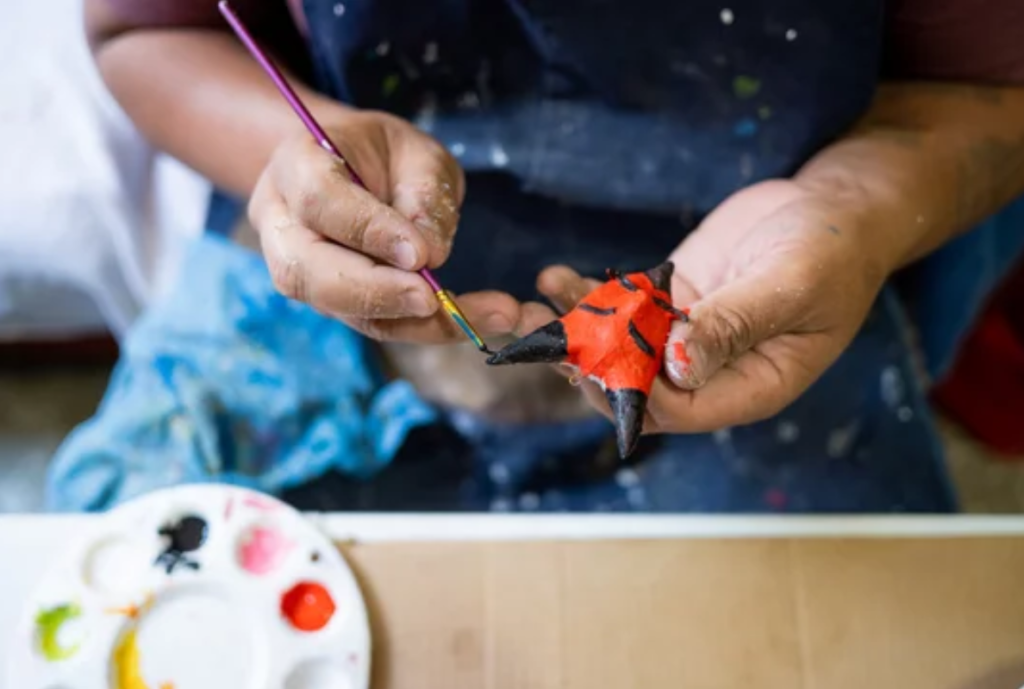
Alebrije workshop in Arrazola or San Martín Tilcajete
Watching a block of copal turn into a vibrant alebrije feels like witnessing imagination take physical form.
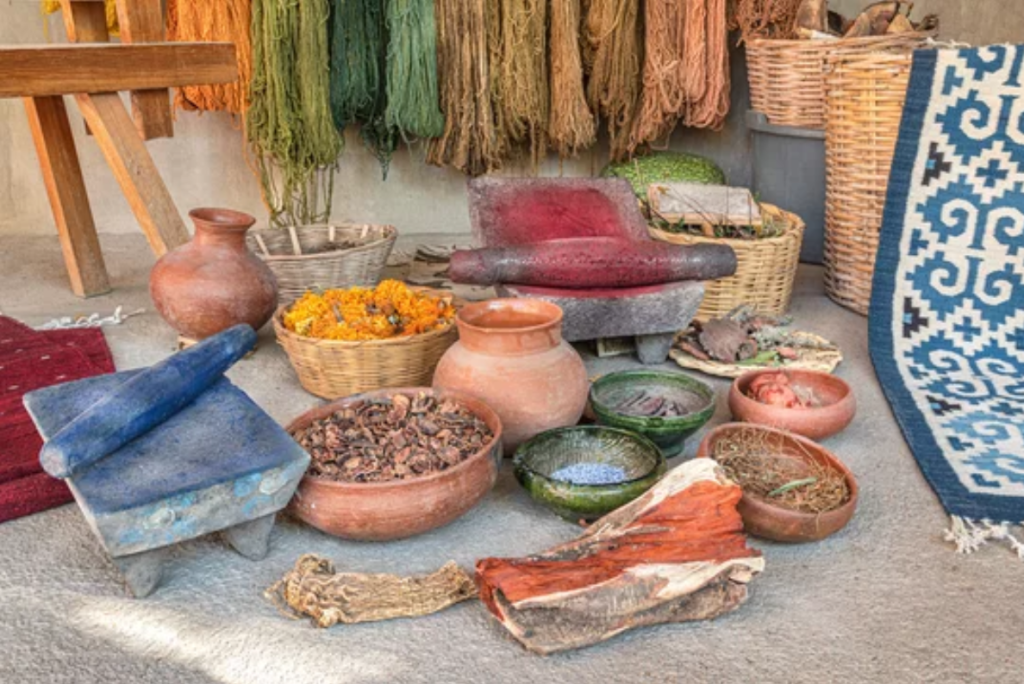

Traditional textiles in Teotitlán del Valle
Looms echo like familiar songs.
The mastery of natural dyes — cochineal, indigo, pericón — is something travelers remember long after they leave.
Black clay in San Bartolo Coyotepec
The shiny finish isn’t paint; it’s a technique perfected across generations.
Pieces are polished by hand, one by one.
Practical tips
- Bring cash; most workshops are family-run.
- Ask before taking photos.
- Buying directly supports artisans fairly.
- Avoid bargaining aggressively; these are labor-intensive pieces.
A deeper meaning
This experience teaches something subtle: that every object carries a world within it.
Meeting the artisans shows how tradition survives — sometimes against all odds.
Visitors often leave with more than a craft; they leave with a sense of connection.
Join this experience with Nandii
You’ll meet families, learn basic techniques, and share human moments that aren’t part of mass tourism.
Oaxaca’s crafts aren’t meant to be observed from afar.
They invite you in — to touch, to learn, and to remember.